
Burglary Crime Prevention

|
||
|
|
||
|
||
|
Burglary Crime Prevention |
||
|
Hello all, We are appealing to residents to remain vigilant following a number of recent burglaries and attempted burglaries in the area. To help protect your home, please consider the following crime prevention advice. Door and window lock advice: Your home is only as secure as its weakest point of entry. That’s why it’s so important to have doors and windows that are as secure as possible. In this section you’ll find lots of advice on how to keep potential burglars out. Whether you live in a flat or a house, your front door will always tell a thief the levels of security surrounding your home. If it looks really secure and burglar-resistant, then they’ll think twice about trying to gain entry. Double secure: Simply shutting the door won’t prevent burglaries. Double-lock the door every single time you leave the house. Modern multi-locking and uPVC doors use a system of hooks and latches to secure the door but these only work if you lift up the handle and then remember to turn and remove the key. Remember – lift, lock and remove. Upgrade your locks: If you change your door locks, choose a 3-star rated euro cylinder lock which meets TS007 standards. These locks protect against some of the common ways for burglars to break in, including:
A locksmith belonging to the Master Locksmiths Association will check to see if your door is secure and made of solid timber or a robust composite. The locksmith can also reinforce the frame and check if the locks and hinges are British Standard approved. Sliding patio doors are vulnerable to forced entry, so do check that yours have an anti-lift device fitted so they can’t be lifted out of the frame. Some uPVC doors are fitted with locks that protrude from the frame on the outside (euro profile locks for those in the know). If yours do, then consider getting a locksmith to change the lock to a shorter one that can't be snapped off.
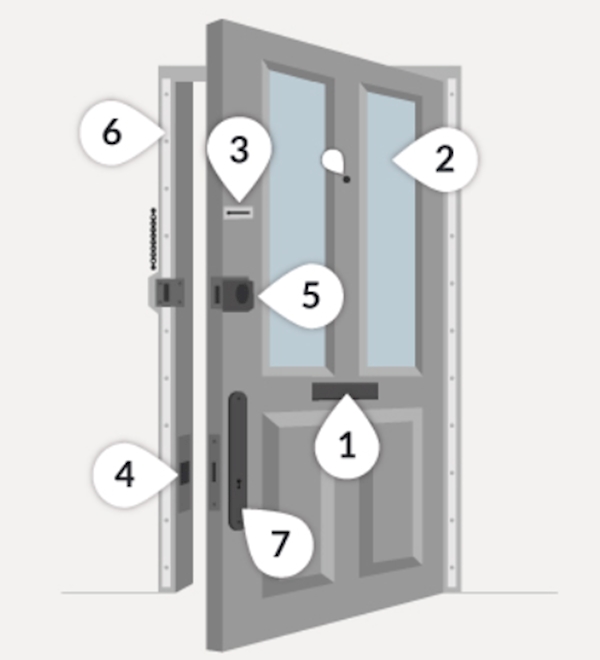
1. If your door has a letterbox, a guard fitted to the rear of the door will prevent someone reaching in with a stick and a hook to fish for any nearby items such as a handbag or keys – which should never be kept near exterior doors. Consider cat flaps and dog flaps too. 2. Windows can be reinforced by using special film or by installing laminated panels. 3. Spy holes and security chains are recommended so that anyone visiting can be identified before you open the door. 4. Always remember to use both locks and check to make sure that the door is double-locked every time you leave your home. 5. A simple turn of a double-locking night latch gives you added security and peace of mind. 6. Door bars, such as a London Bar or Birmingham Bar greatly reinforce the doorframe and provide excellent protection against anyone trying to force a door open or kicking it down. 7. A lock guard does exactly that; it protects the keyhole and lock from being tampered with and is a great deterrent. If you are putting in a new door, always fit security accredited products as these are tested to British standards and approved by the insurance industry. Talk to your locksmith about standard PAS 24 2022. Window security: Burglars target windows as they can offer easier access than doors. Check how your windows look from the outside, removing potential access points where you can. Are there walls, bins or garden furniture that could be used to reach windows? For windows that are within reaching distance such as ground floors, see our tips below.
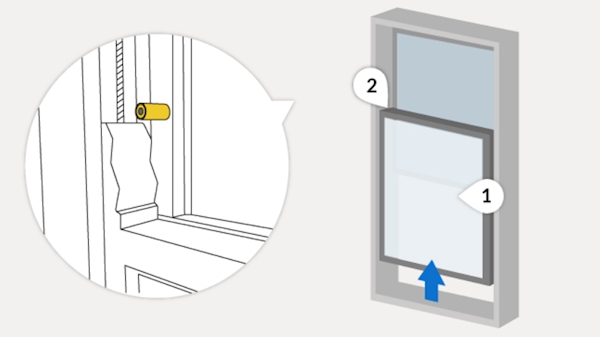
1. Laminated glass or security film is recommended for ground floor and accessible windows. 2. Sash stops prevent anyone opening the sash window enough to climb through.
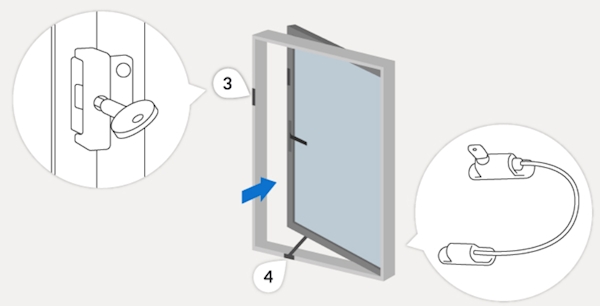
3. Key operated locks are recommended for window types that open out, rather than up, and any ground floor or accessible windows. Remember, window locks are only effective if used, so check that you have locked them before you leave home or go to bed. 4. Window opening restrictors allow you to ventilate your home but make sure they can’t be picked and unlocked from outside. Further advice: You can use window vibration alarms for extra security. These stick onto the glass and sound an alarm if the window shakes, such as when a burglar is trying to break in. They work well on windows:
Burglars have been known to use ladders to access upper windows that appear to be unlocked. This is to avoid intruder alarm sensors on the lower floor. These ladders are either found in a garden or brought by the suspect. You should make sure windows on upper floors have locks or sash stops. You should also extend any alarm sensor coverage to upper rooms. If you’re replacing your windows, always consider a security accredited product as these windows are tested to British standards and are insurance approved. A good standard is PAS 24 2022. A locksmith belonging to the Master Locksmiths Association can suggest the correct standard of window lock and offer advice on upgrading window security. How safe is your flat? Although there are fewer points of entry to a flat, they need to be as well protected as possible. As for overall building security, all residents need to keep an eye and an ear out as well as making sure that communal front and back doors are never left open. Boundary: Protection of a flat begins from the outside. Check that the managing agent or landlord cuts shrubs and planting back regularly so that they don’t obscure anyone from view or interfere with lighting or CCTV. If you notice something’s not working properly or if a light is out, let the managing agent or landlord know so that it can be fixed straight away. Outbuildings: Keep cycle stores, bin stores, sheds and other covered areas locked and secured. These hidden spaces can attract loitering and lead to antisocial behaviour, especially after dark. Communal door: Your communal door is only effective if it is closed and secure, so always remember to check that it locks behind you. If it doesn’t, then report it to your management agent or landlord so it can be repaired quickly. Don’t ever buzz anyone in that you don’t know – even if they say that they’re expected by another resident – or let them follow you in. The best communal door entry system as recommended by the police is an audio and video entry system where residents can see and talk to a visitor before they let them in. The ideal communal door will be robust, security accredited and fitted with a good self-closing arm and two magnetic locks top and bottom. It should also be linked to the fire alarm and an electronic access control system operated by a key fob. Communal doors should automatically open and remain so in the event of a fire but be fitted with buttons or handles that allow you to manually override if needed. Key fobs: For even tighter security on communal entrances in blocks of flats, it’s always a great idea to have personalised security key fobs that can track who is leaving and entering the property. With all multiple occupancy buildings, you never know who’s coming and going. And that’s why it’s advisable to get together and get a key fob for front and rear doors to the building. You can share the expense or, if properties are rented, then approach the landlord, explaining the benefit to them. How key fobs work: Each flat has its own keys plus one or two security key fobs for common entrances – dependent on the number of occupants. If someone loses their fob, they must replace it and get the security system reprogrammed. Do not label keys or fobs with the address. The added benefit, apart from closer scrutiny of visitors to the building, is that there’s no fumbling to get keys in a lock while on the doorstep. Common areas: Consider where the post boxes are located as these are often targeted by criminals. Ideally, they should be in a secure lobby area and be lockable so that no one can easily fish out mail. Checklist for securing your home when you leave it It’s vital to leave your home secure whenever you go out. Getting into an ‘exit routine’ can help ensure that you don’t forget obvious, important things. Examples include keeping valuables away from windows, or leaving lights on if it will be dark before you get home. Here’s what you should do just before you go out. Become a creature of habit Try to get into the habit of following your own course of action when you lock up your home. This will ensure that you don’t forget anything. Here’s what we recommend you do before you go out:
Going away? Here are five tips to help you keep your home and belongings stay safe while you’re away:
Stay safe and remain vigilant | ||
Reply to this message | ||
|


|