

|
||
|
|
||
|
||
|
Police reform must strengthen accountability, not weaken it, says Commissioner |
||
|
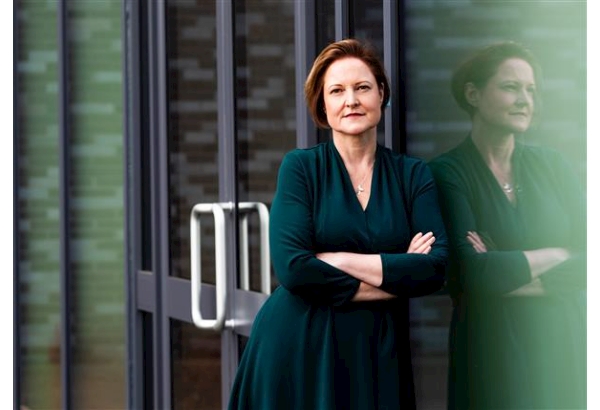
Police and Crime Commissioner for Devon, Cornwall and the Isles of Scilly Alison Hernandez has said a report issued today by the policing inspectorate highlights exactly why police reform must strengthen, not weaken, local accountability. As Government considers significant changes to policing governance, the Commissioner warned that abolishing police and crime commissioners and transferring responsibilities into wider local government structures and plans to create fewer, much larger forces will make it harder for forces to drive improvement, reduce the public's influence over policing and leave victims with a weaker voice in the system. His Majesty's Chief Inspector of Constabulary's State of Policing: The Annual Assessment of Policing in England and Wales 2025-26 report found that too many forces continue to face challenges in areas that matter most to victims, including crime investigations, victim updates and public contact. Commissioner Hernandez said: “The findings of this report make clear that policing still has significant work to do to improve investigations, provide better support for victims and deliver the high standards of service the public pay for and have every right to expect. “In Devon, Cornwall and the Isles of Scilly, 43% of the funding for the police comes from local council taxpayers, with the rest of the money coming from central government.” The Commissioner said she has seen and experienced first-hand the strength and experience of leadership required to drive improvement across a force serving one of the largest geographic areas in England. “Where improvement has been achieved, it has been driven by strong leadership of the Chief Constable, clear accountability and sustained focus. Those are precisely the things we should be strengthening through police reform, not weakening,” she said. “Firstly, the government needs to rethink its plans to move to fewer, larger police forces and rule out the idea of creating a south west mega force. “Devon and Cornwall is already an extremely large police force and there is no evidence that making it part of an even bigger police force would be in the best interests of the public or policing. “Remote leadership with less understanding of local context will leave rural areas at risk of under-resourcing and the scale of disruption and costs of transition will lead to reductions in service for many years at a time when we need, as highlighted by the inspectorate today, to focus on improving the services that policing provides to the public.” The Commissioner’s concerns around compelling Devon and Cornwall to merge with other police forces are shared by residents, with 72% of the 1,600 people who responded to the Commissioner’s recent public survey voicing their opposition to a merger. The report from His Majesty’s Inspectorate comes a day after it was announced that the Government was putting local government reorganisation on hold pending a review of plans to merge councils across the country. The green light had previously been given to expand councils serving Plymouth, Torbay and Exeter, with the rest of Devon forming a separate authority. Commissioner Hernandez said the pause to local government reorganisation would mean more uncertainty about who or what will be responsible for police governance when police and crime commissioners are abolished in May 2028. The government has previously said it is planning to transfer responsibilities currently held by police and crime commissioners to directly elected mayors or, in areas where that isn’t possible, to a Police and Crime Board attended by the leaders of the largest councils in an area. “Now more than ever, many local authorities remain unclear about their own future structures and responsibilities. It is both fundamentally the wrong time, and unfair on them, to ask councils to take on the hugely complex world of police governance and accountability, together with the extensive legal responsibilities that come with it,” said Commissioner Hernandez. “Policing itself is currently grappling with some of the most difficult challenges it has faced in decades, including rising calls for service, increasing violent crime, workforce retention and the need to reduce bureaucracy across the criminal justice system. The public needs policing to be held to account by a body whose sole purpose is to do exactly that. “My fear is that decision-making will become slower because it will be in the hands of many leaders, rather than a clearly accountable individual with a singular focus, and the public’s voice will become even more distant from those leading the service. “The lesson from this report is not that we need to weaken local accountability. It is that we need stronger leadership, stronger scrutiny and an unwavering focus on delivering swifter justice for victims and communities. I urge the new Prime Minister and his team to think again and to focus on delivering what the public needs from policing.”
| ||
Reply to this message | ||
|


|