

|
||
|
|
||
|
||
|
Suffolk Against Fraud |
||
|
Beware of Rogue Tree Service Traders Suffolk Against Fraud (SAF) has recently been alerted to reports of rogue tree service traders operating in the Felixstowe and Ipswich areas. There are concerns that those responsible may still be operating in neighbouring towns and communities.
As the weather improves and gardens require maintenance, we’re reminding residents to remain vigilant. Rogue traders often advertise through leaflets, social media, or doorstep calling, offering services such as tree work, gardening, roofing, or property maintenance. They may use pressure tactics to secure work, demand immediate payment, or charge excessive amounts for poor-quality or unauthorised work.
How to Spot a Rogue Trader Be cautious if someone: • Turns up uninvited offering services. • Claims work is urgent and needs doing immediately. • Pressures you into making a quick decision. • Demands cash payments. • Refuses to provide a written quotation, references, or proof of insurance.
How to Protect Yourself Always obtain at least three written quotes. Check reviews and recommendations independently. Never agree to work on the doorstep. Take time to speak with family, friends, or neighbours before committing. Keep your door locked and use a door chain when answering unexpected callers.
What to Do If you feel pressured or suspicious, do not let the trader into your home and end the conversation. Report concerns to: • Suffolk Police via 101 • Citizens Advice Consumer Service on 0808 223 1133 • 999 if you feel threatened or a crime is in progress
No Cold Calling Zones Communities affected by doorstep crime may wish to consider a No Cold Calling Zone (NCCZ). These schemes, supported by Trading Standards and partner agencies, can help deter rogue traders and provide reassurance to residents, particularly older and more vulnerable members of the community.
Stop. Think. Check. Never feel pressured into agreeing to work or handing over money. Taking a few extra minutes to verify a trader could prevent you from becoming a victim of fraud.
For more information about establishing a No Cold Calling Zone in your area, please visit: www.suffolk.gov.uk/community-and-safety/suffolk-trading-standards/fair For more information on Rogue Traders or to report fraud, please visit: www.reportfraud.police.uk
Charity Collection Bag Scam Linked to Potential Distraction Burglaries Suffolk residents are being urged to remain vigilant following the discovery of a large number of charity collection bags that had been dumped in rural hedges. Criminals may distribute charity donation bags through letterboxes, encouraging householders to leave unwanted clothing and items outside for collection. While these bags can appear genuine, they may not be connected to any legitimate charity. Once donations have been left out, offenders may: • Collect and keep any valuable donated items. • Assess the quality and quantity of goods being donated. • Use the information gathered to identify properties that may contain valuable possessions. • Return at a later date to commit burglary or other offences.
How to Protect Yourself Verify any door-to-door charity collection before donating. Check the charity's official website or contact them directly using details obtained independently. Be cautious of unsolicited collection bags posted through your letterbox. Avoid leaving donations outside your property for extended periods. Consider donating directly to a charity shop or official collection point instead.
If you believe you have been targeted or have concerns about a charity collection: • Report fraud and scams to Report Fraud at www.reportfraud.police.uk or by calling 0300 123 2040. • Contact Citizens Advice Consumer Service on 0808 223 1133 for advice on scams and consumer issues. • Report suspicious activity to police via 101 or online.
Not all charity collection bags are fraudulent, but it is important to verify who is collecting your donations before leaving items outside your home. A few simple checks can help protect both your property and your charitable contributions. If something doesn't feel right, trust your instincts and check before you donate.
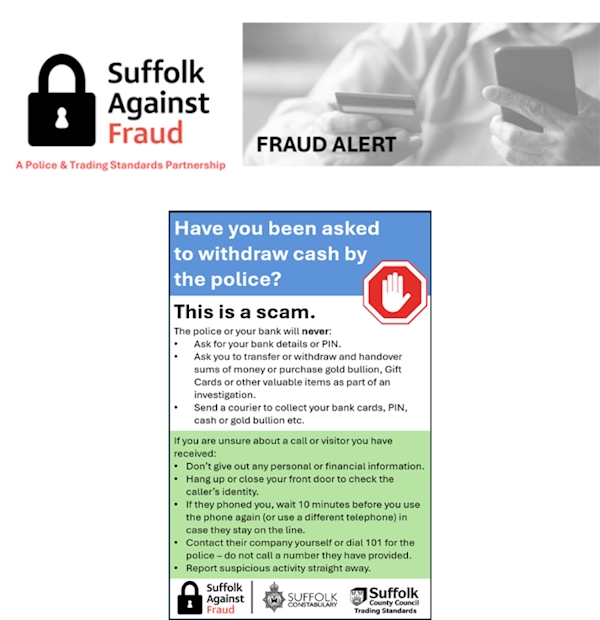
Hang Up on Courier Fraud Following previous reports and awareness campaigns, courier fraud continues to target residents across Suffolk. Fraudsters are sophisticated and convincing, often posing as police officers, bank staff, or other trusted organisations.
Signs of Courier Fraud • You receive an unexpected phone call from someone claiming to be from your bank or the police. • The caller says your bank account has been compromised or that counterfeit notes have been identified. • You are told not to discuss the matter with anyone because it is part of an investigation. • You are asked to withdraw cash, purchase high-value items, or provide your bank card and PIN. • A courier is sent to your home to collect cash, cards, jewellery, or valuables.
How to Protect Yourself Remember: The police or your bank will never ask you to withdraw money, disclose your PIN, or hand over cash, bank cards, or valuables to a courier. If you receive a suspicious call, hang up and wait at least five minutes before using the same phone line, or use a different phone to contact your bank using a trusted number. Never share your PIN, passwords, or security details with anyone. Be wary of callers creating a sense of urgency, secrecy, or pressure to act quickly. Talk to a trusted friend or family member if you are unsure. For more information and to report fraud, please visit: www.reportfraud.police.uk
Report crime online – www.suffolk.police.uk/report To get in touch directly with the SAF team - saf@suffolk.gov.uk To report fraud or suspected scams to Report Fraud - www.reportfraud.police.uk To report fraud or suspected scams to Citizens Advice - www.citizensadvice.org.uk/consumer/scams/reporting-a-scam/ In an emergency, always call 999
| ||
Reply to this message | ||
|


|