

|
||
|
|
||
|
||
|
Sussex Alerts - Victims of courier fraud in Sussex lost over half a million pounds to scams in 2025. |
||
|
Thursday 18th June 2026 Sussex Alerts - Victims of courier fraud in Sussex lost over half a million pounds to scams in 2025.
Victims of courier fraud in Sussex lost over half a million pounds to scams in 2025
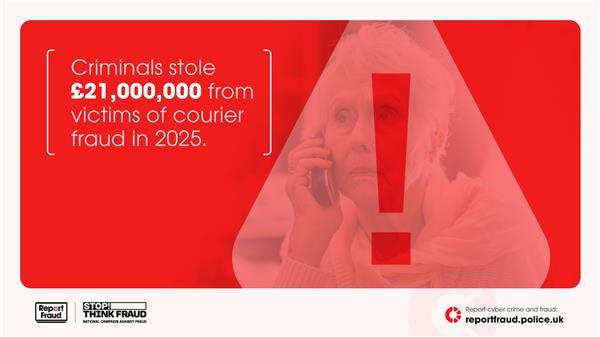
This contributes to a wider national loss of £21 million to courier fraud last year, an increase of 8%.
Know the facts about courier fraud
Courier fraud is a type of scam where victims are contacted by fraudsters impersonating trusted authorities like bank officials or even police officers.
Scams can take place over the phone, via messages and even in person.
Victims are tricked and manipulated into handing over cash, bank cards, or sometimes purchasing and handing over expensive items such as jewellery.
In some cases, the courier may not knowingly be involved in the scam and don’t know they are being used as part of the crime.
Safeguarding and financial abuse officer Police Constable Bernadette Lawrie said: “Courier fraud is a highly impactive crime that often targets elderly and vulnerable people.
“Criminals will sometimes use the victim’s personal information to feign credibility and make the interaction seem more genuine.
“Courier fraudsters are becoming more sophisticated and persistent with their tactics and may try to extend the scam and stay in contact with the victim for multiple days or even weeks.”
What courier fraud can look like
‘Compromised’ bank account: Victims may be contacted by a fraudster impersonating a bank official telling them their account has been compromised and taken over by someone. In order to protect their money, victims are told to transfer their funds to a ‘safe’ account, however this account is run by the scammers who then steal the funds.
Helping a ‘police investigation’: A criminal may contact victims impersonating a police officer claiming that their need money or expensive items to aid an ongoing investigation.
Fabricated bank issues: Fraudsters may call victims claiming there is a problem with their bank card and convince them to share their pin number. Then, the scammer may say that they have identified a fraudulent payment on the victim’s card or that someone has been arrested using the victim’s details. Scammers will arrange for the card to be collected by courier claiming it will be cancelled, but instead, the criminals use the card.
PC Lawrie continued: “Scammers are highly manipulative. They exploit victims through trust in reputable authorities and through fear, urgency and pressure tactics.
“It’s important to know that it’s never the victim’s fault.
“If this has happened to you or a loved one, there is support available.”
Tips for protecting yourself and your loved ones
Always check who you’re speaking to: If you get a call, or text, don’t trust caller ID or the contact card, it’s not proof of ID. Always verify with the organisation by calling them directly with details you know are correct. This can be details on things like utility bills, official websites, or by calling 159 for banks.
If something doesn’t feel right, it probably isn’t: Stop and hang up.
Then check directly with the organisation by contacting them separately using verified contact information.
Sussex Police and banks will NEVER:
Report suspicious calls:
You can report suspected scam calls by texting the word ‘Call’ followed by the caller’s number to 7726.
If you believe you have been a victim of fraud, here’s what to do
| ||
Reply to this message | ||
|


|