

|
||
|
|
||
|
||
|
Officer urges people to be aware of signs of criminal exploitation following county lines week of action |
||
|
Are you aware of the signs of criminal exploitation? A week of action focussing on county lines drug dealing has been used to safeguard those at risk of being exploited while targeting those responsible.
In total twenty-four people were arrested in Suffolk during County Lines Intensification Week. Taking place between 2-8 March, much of the focus for the national week of action was for officers and partner agencies to be aware of and work towards reducing child exploitation, particularly child criminal exploitation associated with county lines, including the use of transport networks to distribute and sell drugs.
Children can be exploited into transporting or selling drugs, both locally and across county borders. Other exploitation includes other associated criminality, such as carrying weapons, being involved in violence, or being the victims of sexual exploitation.
A person under 18 cannot consent to their exploitation.
County lines is where illegal drugs are transported from one area to another, often across police and local authority boundaries, and often by children or vulnerable people who are coerced into it by gangs. The county line is the mobile phone line used to take the orders of drugs.
While the week of action saw the arrest of individuals, there were a range of awareness events and vulnerability checks taking place, as well as training offered for officers and partners to be better able to identify and respond to victims of child exploitation.
The operation involved local policing teams across the county, as well as investigative, proactive and specialist teams.
Of the 24 people arrested, seven people were charged and remanded, with the others still being investigated. In total seven lines were disrupted, with line phones used to advertise and sell drugs seized and closed down.
An estimated £122,000 of heroin was located and seized, along with crystal meth worth £60-£80,000 and cocaine worth £13,750.
Weapons, including an imitation gun, knuckle dusters, a knife and an extendable baton, were also removed from the streets.
Detective Chief Inspector Greg Moore said: “These weeks of action continue to play an important tool in our work to disrupt organised crime and help safeguard some of our most vulnerable members of society, including those that come from towns and cities in other parts of the country.
“This work takes place every single day of the year, but increased proactivity and awareness across the constabulary ensures our officers know the signs of what to look out for, not just for those participating and profiting from these crimes but also signs that might indicate somebody is a victim.
“It is important that everybody is aware of these signs. Signs that a child could be being forced to carry packages or weapons for a gang. Signs that an exploited child is being checked into a hotel with an adult, signs that students are being encouraged via social media to deposit large amounts of cash, potentially unaware they are laundering money for organised crime groups.
“Local intelligence is a key part of ensuring we are investigating, targeting and collating evidence to disrupt those that are causing harm in our communities. I would continue to urge you to contact police if you have any concerns or any information that may help bring those responsible to justice.
“If you would like support or more information on some of the signs to look out for you can visit The Children's Society or the Types of Abuse — Suffolk Safeguarding Partnership.
You can view an animated 'introduction to county lines' video via YouTube at the bottom of this article. The video includes some of the signs that a young person has been or is being exploited.
Signs of criminal exploitation include:
Changes in mood or demeanour (acting secretive and withdrawn) Changes in the way they dress Unexplained or unaffordable new items such as clothes, jewellery, or trainers Regularly going missing for long periods of time or staying out late with no explanation Unexplained absences from school Carrying lots of cash A new phone or being in possession of more than one phone
Part of the force’s work with vulnerable people and exploitation included address checks at homes where people may have been subjected to home invasion, commonly described as cuckooing. This is a practice where people take over a person's home and use the property to facilitate exploitation, for example using the home as a base to deal drugs from.
Multiple address checks were carried out across the force. As well as providing support and guidance to the residents of these addresses.
There were also welfare checks carried out with vulnerable members of the community, including those that could be victims of modern slavery.
Community engagement events took place throughout the week, including with students at schools and colleges.
Tim Passmore, Suffolk’s Police and Crime Commissioner, said: “I fully support this targeted approach which is having such a positive impact right across the county. “I hope this pro-active enforcement sends out a clear message that criminals are not welcome anywhere Suffolk.
“The threat to society from the illegal drugs business is huge - it wrecks lives, and whole communities are affected. Sadly, the drug barons often prey on individuals who are at risk and very vulnerable, which is absolutely despicable.
“It is clear the Constabulary cannot deal with these issues alone, so I am very pleased to see this multi-agency approach being adopted to tackle criminal activity. Suffolk is a relatively safe place to live and we need to keep working together to keep it that way.”
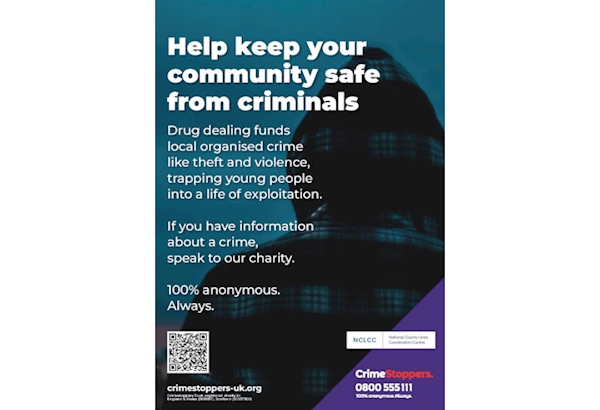
If you suspect drug activity report this via the website Report a crime | Suffolk Constabulary, call 101, or alternatively you can contact the independent charity Crimestoppers to report anonymously – either online at Independent UK charity taking crime information anonymously | Crimestoppers or by calling 0800 555 111.
An animation on county lines drug dealing can be viewed here: An introduction to county lines
| ||
Reply to this message | ||
|


|