

|
||||||||||||||||||||||||||||||||||||
|
|
||||||||||||||||||||||||||||||||||||
|
||||||||||||||||||||||||||||||||||||
|
FROM PAST TO PRESENT |
||||||||||||||||||||||||||||||||||||
|
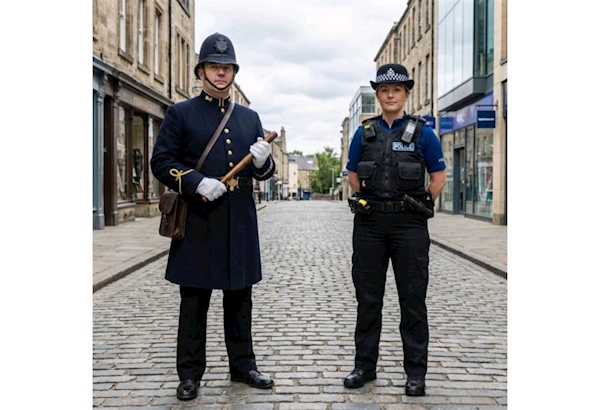
Evening all, Further to my last WM Now message regarding the new taser roll-out, here are some interesting historical facts.. …. The history of UK police protective equipment has evolved from simple wooden tools and symbolic uniforms in the 19th century to high-tech personal protective equipment (PPE) designed for modern threats. Victorian Origins (1829–1900) Sir Robert Peel established the Metropolitan Police in 1829 with a focus on "policing by consent," intentionally avoiding a military appearance. Headgear: The first "Peelers" wore reinforced top hats (stovepipe hats) strengthened with cane to protect against blows and serve as a step for looking over walls. In 1863, these were replaced by the iconic custodian helmet, made of cork and fabric, providing better head protection. Protection: High leather-lined collars were designed to protect against garroting (strangulation). Weaponry: Officers carried only a wooden truncheon and a rattle (replaced by the whistle in 1884). Truncheons were initially concealed in coat tails but later moved to a dedicated trouser pocket to maintain a non-aggressive appearance. Early to Mid-20th Century Equipment remained minimal for over a century, relying on the presence of the uniform and the truncheon. WWII Gear: During the war, officers were issued military-style steel helmets for protection during air raids. Specialist Arming: While the force remained primarily unarmed, certain officers were historically issued flintlock pistols or revolvers for high-risk situations (a practice largely phased out by 1936). Horse Patrols: Mounted sections used longer truncheons for riot control and were key for crowd management until the late 20th century. The Modern Era (1990s–Present) The 1990s marked a major shift toward proactive officer safety following increased attacks and fatalities. Body Armour: Stab vests and ballistic vests became standard frontline issue in the mid-1990s. Before official mandates, some officers privately purchased covert armour for their own protection. Baton Evolution: In 1994, the 14-inch wooden truncheon was phased out in favour of telescopic expanding batons. Side-handle batons (PR-24) were briefly used but mostly replaced by friction-lock models. Less-Lethal Weapons: CS or PAVA spray (incapacitant sprays) were introduced, followed by Tasers in 2003 to bridge the gap between batons and firearms. Modern PPE: Today’s equipment includes reinforced safety boots with steel toes, high-visibility waterproof jackets, and modern digital radios. Timeline of Key Developments
| ||||||||||||||||||||||||||||||||||||
Reply to this message | ||||||||||||||||||||||||||||||||||||
|


|