

|
||||||
|
|
||||||
|
||||||
|
December news from the Police and Crime Commissioner for Hertfordshire |
||||||
|
News from your Commissioner Jonathan Ash-Edwards December news from the Police and Crime Commissioner for Hertfordshire Dear Resident, Welcome to my newsletter for December 2025 – in this edition: Live Facial Recognition pilot comes to Hertfordshire Concerns about regional police force mergers Listening to young people’s voices on knife crime and violence against women PCC: abolishing jury trials will undermine public confidence in our justice system Reflecting on progress in 2025 to keep Hertfordshire safe If you’re on Facebook, why not follow me and let’s keep the conversation going and if there are any issues you would like to raise please email me at commissioner@herts-pcc.gov.uk
Live facial recognition pilot comes to Hertfordshire
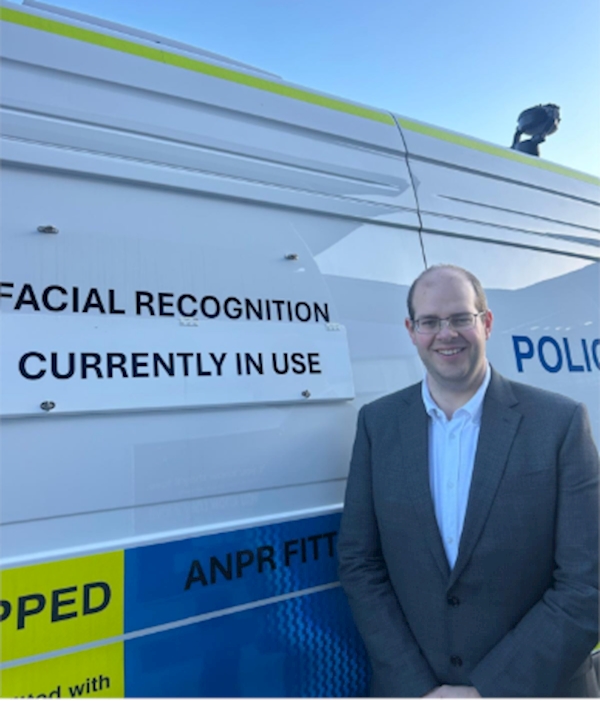
Live facial recognition technology has been used by Hertfordshire Constabulary for the first time, with a trial deployment at the Brookfield Shopping Centre in Cheshunt last week. Hundreds of individuals wanted by the police or courts for serious offences were added to a watchlist which was compared with a live camera feed of members of the public passing a police van. An alert is sounded if an individual was spotted; but if there is no match, then the data of innocent members of the public is deleted immediately. Neighbourhood Policing Team officers were on hand to engage with any individuals who were wanted as well as to engage with the public and explain the technology. Although this is the first time that Live Facial Recognition has been used in Hertfordshire, this is tried and tested technology that has resulted in the arrest of wanted serious offenders when used by other police forces. The technology is used with significant safeguards and scrutiny. I hosted a community scrutiny meeting in Broxbourne before the deployment so local leaders and community members could find out more. At the settings the technology is used in Hertfordshire, there is no statistically significant evidence of bias and decisions on whether to engage with a member of the public are ultimately made by police officers in the same way they would if they spotted someone on the street they thought was wanted. Thank you to the thousands of residents who completed by survey about what you thought about the use of Live Facial Recognition in Hertfordshire. Overwhelmingly, you were positive about the technology: 91% of respondents said you thought it would help the police catch criminals 81% of respondents said you thought the use of the technology was ‘always’ or ‘usually acceptable 93% of respondents said it wouldn’t change your willingness to go into town if you knew the technology was being used A full evaluation on the pilot will be carried out before any further deployments take place. I’ll be discussing the outcome of this with the Chief Constable at a future Accountability & Performance Meeting.
Concerns about regional police force mergers You may have seen media speculation about the prospect of local police forces being merged, possibly into as few as 12 regional police forces. This is in advance of a Police Reform White Paper which is expected to be published early in the New Year. At the moment, the exact proposals the Government may wish to make are unknown, but police force mergers are clearly under consideration. I am really worried about what this could mean for policing locally. Hertfordshire is not an administrative inconvenience on a Whitehall map. It is an ambitious county that is one of the safest places to live in the UK because it has a county police force focused on the county’s crime challenges and priorities. Local residents rightly expect decisions about their policing and community safety to be made locally, not having to compete for attention from a distant regional command structure based miles away with little understanding of local concerns. While crime doesn’t respect administrative borders, every crime has a local footprint and harms a victim living in a local community. Bigger does not mean better. Creating twelve versions of the Metropolitan Police, the police force that is less trusted by its communities and solves less crime than the average, will not improve policing. Super-sized regional forces would be slower to respond, less interested in local priorities, harder to hold to account and more likely to divert resources away from neighbourhood policing – the very model the public consistently value the most. Read more of my comments here. I’m watching developments very closely and will update local residents and seek your views about your local policing when more is known.
Listening to young people’s voices on knife crime and violence against women
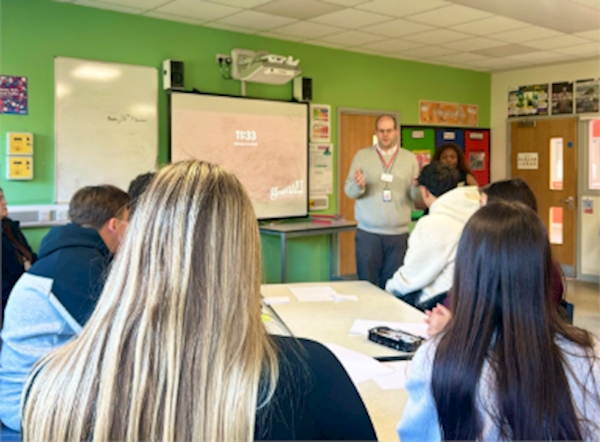
Earlier this year, I launched Hertfordshire’s first Youth Commission because young people’s voices deserve to be at the heart of how we shape policing and tackle crime. The commission brings together 25 young people aged between 14-25 who are passionate about making a difference in their local communities. Their role is simple but powerful, talk to other young people, listen to what really matters to them, and bring those views back to us to reflect and act on. I’ve recently visited two schools – Goffs-Churchgate Academy in Broxbourne and Yavneh College in Hertsmere – to see the open conversations being held about tough subjects, such as knife crime and violence against women and girls. The Youth Commission’s work is already helping us understand what young people need from policing, where they feel unsafe and the safety priorities they have. And I’m looking forward to the New Year where that insight will be brought to me, the Chief Constable and other senior leaders at a final conference. I’m determined that young people’s voices genuinely shape how Hertfordshire is kept safe and the findings of the Youth Commission will play a central role in informing our approach going forward.
PCC: abolishing jury trials will undermine public confidence in our justice system I was concerned to hear the Justice Secretary’s plans to abolish Jury trials in all but the most serious cases. The move risks, in my view, undermining centuries-old principles of justice, weakening public confidence and damaging the legitimacy of the criminal justice system. The right to be judged by a jury of your peers has been a safeguard in the criminal justice system for hundreds of years. It is a fundamental constitutional protection, not an inconvenience to be swept aside at the whim of a Minister. Juries provide important transparency and independence from the state. They increase the chance of a defendant being judged by someone who understands their life. And they ensure that justice is seen to be done fairly. Several years ago, before I was PCC, I was called to serve on a jury. I saw first-hand the inefficiencies and delays in the Court system that have a significant impact on victims. But none were the jury’s fault – 12 men and women turned up on time every day and did their civic duty. There are lots of things that could be done to sort delays in the Courts. The Government could start by funding Courts to open on the large number of days they currently sit empty and fixing the inefficiencies that too often let victims, witnesses and people working in the criminal justice system down.
Reflecting on progress in 2025 to keep Hertfordshire safe
It’s been a busy year of progress in Hertfordshire, with a new Chief Constable and a new Police & Crime Plan firmly in place and being implemented. Significant progress is being made on your policing and community safety priorities: More high visibility police patrols through Operation Hotspot Town centre crime falling through our Safer Town Centres project More crime being solved by Hertfordshire Constabulary – 1200 more crimes solved in the first 10 months of this year compared to last year Some of the strongest 999 and 101 call answering performance in years There is lots more to do though and I’m looking forward to working with Hertfordshire Constabulary and community safety partners in 2026. This year, my Christmas card was designed by students at Pinewood School in Ware, a fantastic SEND school I visited with the neighbourhood policing team earlier in the year. The winning entry (pictured) was by Drew on the theme of ‘Kindness at Christmas’. Thank you Drew and all the students for your wonderful entries.
May I wish you and your family a very Merry Christmas and Happy New Year.
Best wishes, Jonathan Ash-Edwards | ||||||
Reply to this message | ||||||
|



|