

|
||
|
|
||
|
||
|
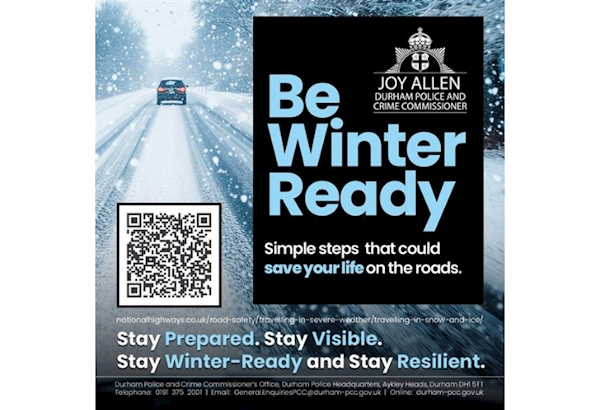
A message from the Durham Police and Crime Commissioner... Steps that could save your lives on the roads. |
||
|
Last week I took a call from my daughter, who lives just 15 minutes away. She was worried about driving to work because the roads were already turning white and the snow was falling heavily. She asked what it was like where I lived – and at that moment it was perfectly clear: no snow, dry roads, blue skies. But within ten minutes everything changed. The weather closed in, visibility dropped, and the landscape was transformed. That sudden shift was a stark reminder that winter conditions can change rapidly and without warning, and why every journey, even the familiar ones, requires preparation. Here are practical steps, echoing National Highways’ Safe T.R.I.P. campaign and TyreSafe guidance, that every driver should adopt. • Follow the T.R.I.P. check before every journey T: Top Up. Ensure your vehicle has plenty of fuel or, for electric vehicles, adequate charge, allowing for diversions or delays. Top up screen wash with freeze resistant fluid and check oil, coolant and anti-freeze. R: Rest. Fatigue reduces reaction times, especially in long night drives, fog or heavy rain. Build in rest stops on longer routes. I: Inspect. Check tyre tread (legal minimum 1.6mm but aim for 3mm), air pressure and condition. Make sure lights work, wipers are effective, and your windscreen is fully cleared before moving off. P: Prepare. Carry a winter-ready kit: warm clothing, blanket, high visibility jacket, warning triangle, de-icer, scraper, torch, charger/power bank, water, snacks, first-aid kit, jump leads and a small shovel for rural areas. Winter conditions can vary sharply even a few miles apart, as my daughter and I discovered. Before travelling: Check traffic alerts, accidents and road closures. Review Met Office warnings for snow, ice or freezing fog. Stick to main roads where possible, as they are more likely to be gritted. If conditions worsen, delay or reconsider your journey. The sun sits low in the sky, creating dangerous glare. Always keep sunglasses in the car and ensure your windscreen is spotless. Modern LED headlights and wet roads can dazzle. If you are sensitive to glare, consider anti-glare night-driving glasses. Drive for the weather, not the clock. Reduce speed and leave significantly more space. Brake early and accelerate gently. Expect black ice on bridges, shaded bends and rural roads. Avoid harsh steering or sudden manoeuvres. If travelling in severe weather, tell someone where you’re going and when you expect to arrive. Build in extra time and never feel pressured to take risks.
| ||
Reply to this message | ||
|


|